
Issue 296 - Is this the end of world music?

World music

Find out more about
Net Languages courses
Basic

Vocabulary: Musical instruments

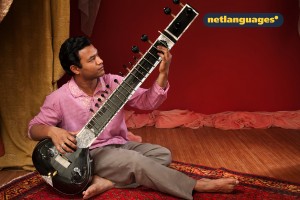
Look and listen. Look at these musical instruments. How do you say them in English?


Can you remember? Choose the correct option.


Is this the end of world music?

Read the text and listen to the audio.

Is this the end of world music?

What do you think of when you hear the words "world music"? Perhaps you think of a specialist radio programme, or a section for CDs in an old music shop. Years ago, people often used this term for music that was not in English.

Today, things are very different. Music from around the world is now very popular. Spanish singer Rosalía has many fans in different countries. Puerto Rican artist Bad Bunny sang in Spanish at the Super Bowl halftime show in the United States. K-pop, a genre of music from South Korea, is also very famous around the world. Millions of people watch South Korean music videos online every day.

Technology has helped this change happen. With streaming apps, people can find international music very quickly. Social media can also make a local song famous in many countries in just a few days. It is now easier to understand songs in other languages because people can read subtitles, translations, and lyrics online.

This is good news for language learners. Many people these days learn new words and pronunciation by listening to songs or watching films and series. Learning a language is no longer about studying from a book in a classroom.

Some people think the term "world music" is old-fashioned. Music from different countries is now part of normal everyday life for many listeners around the world.

Find out more about
Net Languages courses
Intermediate


Is this the end of world music?

Read the text and listen to the audio. Then answer the questions in the Comprehension section.

Is this the end of world music?

What do you think of when you hear the term, "world music"? A specialist programme on a radio station? A friend who has quirky music taste? A dusty corner of a CD shop?

Those days are disappearing fast. Music from every corner of the world is now part of everyday culture. Spanish singer Rosalía caused a sensation at this year's Brit Awards in the UK, while Puerto Rican artist Bad Bunny became the first Super Bowl halftime performer to sing almost completely in Spanish. South Korean pop music, or K-pop, has also become a global phenomenon. In fact, K-Pop Demon Hunters, a film centred entirely around South Korean music culture, became Netflix's most-watched original title ever, with more than 500 million views worldwide.

Technology has played an important role in this change. Streaming platforms allow listeners to discover artists from almost any country within seconds. Social media can turn a local song into a worldwide hit overnight. Language is no longer such a barrier when subtitles, translations, and lyrics are available instantly online.

Many online platforms now allow users to read along with song lyrics while listening, making it easier to follow new vocabulary and pronunciation. Films, television series, podcasts, and music in different languages are now easier to access than ever before. Learning a language no longer depends only on textbooks and classrooms.

Many people now argue that the term "world music" shouldn't be used anymore. They say that it's outdated, and far too general a category to cover so many different styles and artists. Our music tastes have gotten wider, and the world is becoming smaller, as we become more open to different voices and experiences. For anyone interested in languages and culture, we are living in a golden age for international connection.

Now answer the questions in the Comprehension section.

Comprehension: Check your understanding

Choose the correct option.

Find out more about
Net Languages courses
Advanced


Is this the end of world music?

Read the text and listen to the audio. Then answer the questions in the Comprehension section. 

Is this the end of world music?

What comes to mind when you hear the phrase "world music"? Perhaps a niche radio programme, an eccentric friend with unusually eclectic taste, or a forgotten section at the back of a record shop. For decades, the label was used to describe music that existed outside the English-speaking mainstream, grouping together countless artists and traditions from completely different cultures.

Today, however, that category feels increasingly outdated. Music from around the world is no longer treated as something exotic or marginal; it has become part of global popular culture. Spanish artist Rosalía's performance at this year's Brit Awards in the UK became a viral sensation, while Puerto Rican singer Bad Bunny became the first performer to sing almost entirely in Spanish during the Super Bowl halftime show. Meanwhile, K-pop has developed into a truly international phenomenon, influencing fashion, television, and online culture far beyond South Korea itself. In fact, K-Pop Demon Hunters, a film focused entirely on South Korean music culture, became Netflix's most-watched original title ever, reaching more than 500 million views worldwide.

Technology has been central to this transformation. Streaming platforms allow listeners to explore artists from virtually any country within seconds, while social media can propel a previously unknown song to worldwide fame overnight. Language barriers have also become less significant thanks to translations, lyric videos, and online fan communities that help international audiences engage more deeply with foreign-language content.

For language learners, this shift offers remarkable opportunities. Music provides exposure to authentic vocabulary, pronunciation, and cultural references in ways that traditional textbooks rarely can. Learning a language has become a far more immersive and personal experience, shaped increasingly by entertainment and digital culture rather than formal education alone.

As a result, many critics argue that the term "world music" no longer makes sense. It suggests that English-language music is somehow the default, while everything else belongs to a separate category. In an era where listeners move effortlessly between languages, genres, and cultures, music no longer feels divided into "local" and "foreign" in the same way it once did.

Now answer the questions in the Comprehension section.

Comprehension: Check your understanding

Choose the best option.

Interview: Listen to more about the topic

Think about your answers to the following questions. Then listen to somebody answering the same questions. Were your answers similar?  

Find out more about
Net Languages courses