
Issue 297 - Dancing in the daylight

Dancing in the daylight

Find out more about
Net Languages courses
Basic

Vocabulary: Going out at night

Look and listen. Look at these things you see when you go out at night. How do you say them in English?


Can you remember? Choose the correct option.


Dancing in the daylight

Read the text and listen to the audio.

Dancing in the daylight

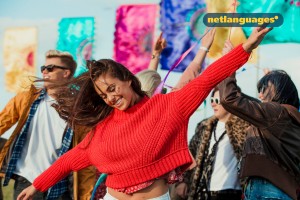
Picture this: you’re on a dance floor. Loud music plays from the speakers. You are surrounded by a crowd of happy people. But it’s 11am, and you have a croissant in one hand and a matcha latte in the other. It may sound strange, but this is a new trend — coffee raves.

These days, not as many young people drink alcohol. Because of this, new ways to meet people and have fun are becoming popular. Coffee raves are daytime events focused on music and coffee. They are now happening in many cities around the world, from New York to Beijing.

These events have a party atmosphere, but without the late nights and hangovers. They are popular with people who care about their health, as well as shift workers and people who don’t want to spend a lot of money on a night out. People drink coffee or mocktails, and simply enjoy the music and the atmosphere.

There is also a strong social side. Many people want real connection and enjoy meeting others with similar interests in things like health and balance. Daytime parties make this easier.

Will this trend continue? It’s difficult to say. But even nightclubs are starting to offer events in the daytime. These are popular with parents and older people, but also people who like going to bed at a reasonable time. For now, the party doesn’t have to start at midnight.

Find out more about
Net Languages courses
Intermediate


Dancing in the daylight

Read the text and listen to the audio. Then answer the questions in the Comprehension section.

Dancing in the daylight

Picture this: you’re on a dancefloor. Pounding music comes from the direction of the turntables. A crowd of happy faces surrounds you. Only, it’s 11am, and you have a croissant in one hand and a matcha latte in the other. It might sound strange, but this is the latest trend — "coffee raves”.

In recent years, fewer young people than ever are drinking alcohol. In fact, there has been a steady downward trend over the past two decades. As a result, new ways of socialising are beginning to appear. Coffee raves, daytime social events fuelled by caffeine and pastries, are springing up from New York to Beijing and everywhere in between.

These events offer music, dancing, and a lively atmosphere — but without the late nights and heavy drinking. They are especially popular with people who are health-conscious, as well as shift workers and those who simply can’t afford a long, expensive night out. People drink mocktails or specialty coffee, and the focus is more on soaking up the atmosphere and the music.

There is also a social side to this trend. Many people say that in today’s digital world, they are craving real connections and want to meet others who share similar values, such as wellness and balance. Daytime parties provide a space where this feels easier and more natural.

Will this trend last? It’s hard to say. However, even more traditional nightclubs are offering events earlier and earlier, attended by parents who want to make it home in time for bedtime, the older generation who still enjoy clubbing, or anyone who prefers to finish their evening at a reasonable hour. It seems that, for now at least, the party doesn’t have to start at midnight.

Now answer the questions in the Comprehension section.

Comprehension: Check your understanding

Choose the best option.

Find out more about
Net Languages courses
Advanced


Dancing in the daylight

Read the text and listen to the audio. Then answer the questions in the Comprehension section. 

Dancing in the daylight

Picture this: you’re on a packed dance floor, moving to the pulse of music flowing from the speakers, surrounded by a sea of smiling faces. Yet it’s 11am, and instead of a beer, you’re holding a croissant and a matcha latte. Unusual as it may seem, this is the reality of a growing trend — the so-called “coffee rave.”

In the past two decades, alcohol consumption among young people has steadily declined, with a growing number identifying as teetotal. As a result, new forms of socialising are beginning to emerge. Coffee raves, daytime gatherings built around music and caffeine, are appearing in cities across the globe, from New York to Beijing and beyond.

These events offer many of the elements associated with traditional nightlife: pounding music, dancing, and a lively atmosphere. However, they remove some of the more unsavoury aspects, such as late nights and excessive drinking. They have proved especially popular with health-conscious individuals, shift workers, and those unwilling or unable to meet the prices of a typical night out. In place of alcohol, attendees opt for speciality coffee and mocktails, shifting the focus towards soaking up the atmosphere.

There is also a deeper social dimension to this trend. In today’s online world, many express a desire to make more meaningful connection and seek out environments where they can meet like-minded people who value wellbeing and balance. For many, daytime parties offer a setting in which this feels both natural and accessible.

Whether this trend will endure remains uncertain. Nevertheless, its influence is already visible, with more traditional nightclubs experimenting with earlier events aimed at a broader audience — including parents, early risers, and those who simply prefer to end their evening at a reasonable hour. For now, at least, the idea that a party must begin at midnight is being redefined.

Now answer the questions in the Comprehension section.

Comprehension: Check your understanding

Choose the best option.

Interview: Listen to more about the topic

Think about your answers to the following questions. Then listen to somebody answering the same questions. Were your answers similar?  

Find out more about
Net Languages courses